
Could Coffea liberica Become the Next Star in the Coffee World?
The world is warming up, the area suitable for growing coffee is increasingly shrinking. The coffee industry faces challenges when productivity and coffee quality decline and some varieties are at risk of extinction. Therefore, experts are making efforts to expand the coffee portfolio with new varieties. Among them, Coffea liberica is considered to have strong adaptation potential and the ability to re-export as a main crop such as Arabica and Robusta.
I. An Overview of Coffea liberica
When talking about the Coffea family, most of us immediately think of Arabica or Robusta – the two species dominating the modern coffee industry. However, there is another distinctive and lesser-known name in this picture: Coffea liberica. This species was once widely cultivated at the end of the 19th century following the coffee leaf rust crisis that devastated Arabica in many regions. Over time, Liberica faded into the background. Only recently, as the specialty coffee industry sought highly adaptable species with unique flavors, Liberica has been rediscovered with growing curiosity and appreciation.

Liberica coffee is known for its origin from the Republic of Liberia
Image credits: Coffee Consulate.
Coffea liberica originates from West and Central Africa, particularly the tropical forests of Liberia, the country from which it takes its name. However, through global spread since the 19th century, Liberica has been planted in many other tropical regions, especially in Southeast Asia, with Vietnam, the Philippines, and Indonesia currently holding significant cultivation areas. In Vietnam, Liberica is known as “jackfruit coffee” due to its distinctive aroma reminiscent of ripe jackfruit.
Thanks to its wide distribution and flexible adaptability, Liberica is not only a unique specialty coffee in terms of flavor but also plays a strategic role in sustainable agriculture, offering farmers diverse options amid increasing climate change and pest challenges.
II. Biological Characteristics of Coffea liberica
Coffea liberica is one of the lesser-known coffee species but possesses remarkable biological traits that allow it to thrive in challenging conditions while producing flavors few other coffees can match. Compared to Arabica or Robusta, Liberica stands out with its exceptional height, broad canopy, and deep roots, which not only help the tree access water and nutrients more effectively but also reduce competition with surrounding plants.


Image credits: My Liberica.
Liberica has large, thick, and sturdy leaves, adapting well to strong sunlight and high temperatures. Its white flowers bloom sporadically, emitting a gentle fragrance that attracts pollinating insects. The growth cycle of Liberica beans is typically longer than Arabica, taking 7-9 months from flowering to ripening, allowing the beans to develop fully and accumulate natural sugars, contributing to sweetness and distinctive flavors when roasted.
III. Flavor Potential of Coffea liberica
The flavor of Coffea liberica often opens with ripe tropical fruit notes, immediately creating a full-bodied and rich sensation, distinct from the lightness of Arabica or the robustness of Robusta. As the tasting experience deepens, warm spices and subtle floral notes emerge, offering a delicate balance that allows drinkers to enjoy freshness alongside depth and complexity. The finish is usually long, with woody and honeyed undertones, providing a lasting and memorable experience.
The diverse flavor profile of Liberica also offers endless creative potential for roasting and brewing methods. Roasters can adjust temperature and time to emphasize fruitiness, spice, or natural sweetness, while brewers can highlight these characteristics through pour-over, cold brew, or traditional drip coffee, creating a unique experience entirely different from common coffee varieties.

Image credits: My Liberica.
Beyond its tasting experience, the flavor potential of Liberica reflects its biological value. The rich aromatic compounds result from the bean’s ability to accumulate sugars, acids, and essential oils – traits directly linked to its biological characteristics and growing environment. This makes Liberica not only a coffee to enjoy but also a promising subject for researchers, roasters, and enthusiasts exploring new frontiers in flavor.
IV. Coffea liberica once almost usurped Arabica's throne
Many experts noted that Coffea liberica has strong pest resistance and can grow in low, warm areas (0 – 1000 m above sea level). Some studies also indicate that Liberica tolerates drought and prefers regions with evenly distributed rainfall and high humidity. These traits made Liberica a potential alternative or supplement to Arabica in the 1880s. When selected for wider cultivation, some believed it could displace Arabica and expand coffee-growing boundaries due to its ability to thrive in warm, low-altitude environments.

Coffea liberica has good resistance to pests and diseases
Image credits: Coffee Concept.
However, it never replaced Arabica. Nevertheless, Liberica significantly expanded coffee production areas within the last two decades of the 19th century, covering low-altitude tropical belts worldwide, including South America, parts of the Caribbean, Africa, the Indian Ocean islands, Asia, and Australia. Over three decades, Liberica became widely cultivated in Upper West Africa, Madagascar, and Asia (especially the Philippines, India, Malaysia, and Java).
V. Coffea liberica Re-emerges Amid Rising Climate Change
Today, wild coffee trees are gradually disappearing due to climate change and deforestation. Arabica and Robusta farms are also facing challenges from increasing climate pressures. Coffee yields in many regions are expected to decline sharply, disrupting global coffee supply. This has led experts at the Royal Botanic Gardens, Kew, to suggest that Liberica could emerge from the shadow of Arabica and Robusta, opening commercial opportunities for Liberica and its variants.
Specifically, a December report in Nature Plants highlights the potential of Liberica, particularly the excelsa variant. Developing Liberica variants may offer the most cost-effective and successful climate adaptation strategy for the coffee industry. Excelsa has attracted attention from researchers and market actors seeking differentiation, crop diversification, and climate resilience. This variant also shows promising benefits compared to traditional Liberica in bean quality, cultivation requirements, and pest resilience. Sensory attributes suggest significant potential for the industry’s future.

Image credits: Coffee Concept.
In short,
While Liberica and its variants show great promise, researchers caution that their success depends on market conditions and the supply of Arabica and Robusta. Otherwise, the coffee industry may struggle to drive market-oriented research or commercial adoption of this coffee. The future remains uncertain, and readers can follow XLIII Coffee for timely updates.
VI. FAQs
1. What is Coffea liberica, and how does it differ from Arabica or Robusta?
Coffea liberica is a native coffee species with large beans, unique flavors of tropical fruits, light floral notes, and a sweet woody finish. Unlike the delicate Arabica and robust Robusta, Liberica offers a full-bodied and distinctive experience.
2. What climate and soil conditions does Liberica prefer?
Liberica thrives in hot, humid climates, well-draining, fertile soil, tolerates drought reasonably well, and adapts to regions from low hills to tropical plains.
3. What biological traits help Liberica grow strongly?
Liberica grows tall with a broad canopy and deep roots, has thick sturdy leaves, sporadically blooming flowers, and slow-maturing beans, supporting sustainable growth and flavor accumulation.
4. How are Liberica beans different from other coffee beans
Liberica beans are large, long, asymmetrical, and rich in natural sugars, producing full-bodied structure and complex flavors when roasted and brewed.
5. Does Liberica have the potential to become a popular specialty coffee?
Yes, with its unique multi-layered flavors and high adaptability, Liberica is a strong candidate for specialty coffee and sustainable agriculture.

Bài viết mới

- Taste the Origin
Rift Valley Coffee Caucus #03757 – A Testament to Western Kenya’s Collective Spirit
Turning our gaze to the Great Rift Valley of East Africa, the fertile volcanic landscapes are witnessing an inspiring transformation. Moving away from fierce, survival-driven competition, smallholder farmers in Western Kenya have chosen to join forces, forging a resilient and unified network. The Rift Valley Coffee Caucus #03757 lot stands as the ultimate testament to this remarkable collective synergy.

- Breaking News
Airworks Coffee & XLIII Coffee – A “handshake” that brings original flavors across borders
XLIII Coffee, alongside our key wholesale partner Airworks Coffee, officially announces the latest release of specialty coffee lots for the North American market. This event reaffirms our commitment to bringing original flavors across all geographical barriers to coffee enthusiasts.
Early access (for Subscribers of Airworks): 10:00 AM (PST) | Wednesday, April 29, 2026
General access: 10:00 AM (PST) | Friday, May 1, 2026
We invite our Customers and Partners to visit (airworkscoffee.com) for detailed information and to prepare for this special release!
- Taste the Origin
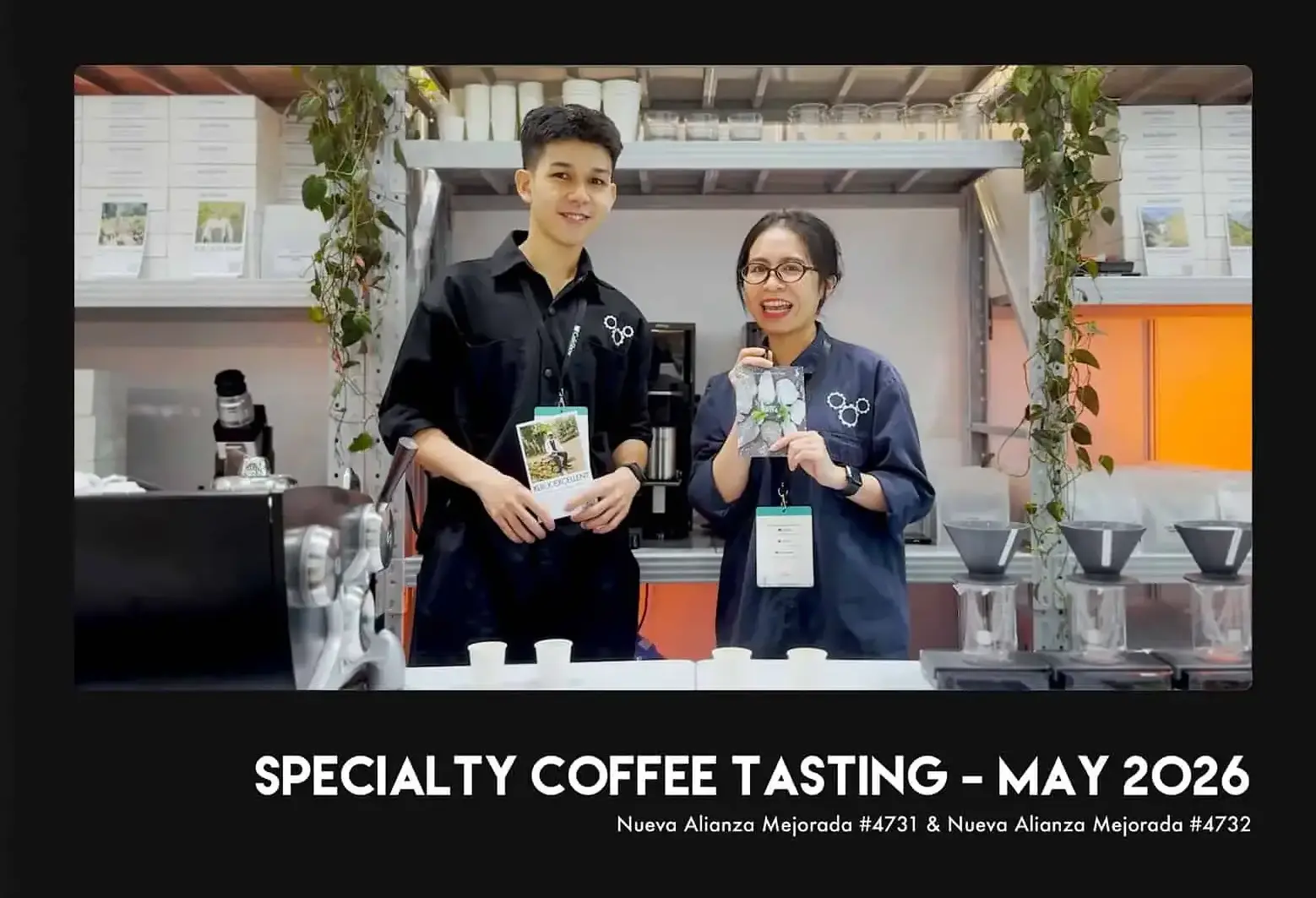
Unveiling May Discovery Subscription: Nueva Alianza Mejorada #4731 & Nueva Alianza Mejorada #4732
The Discovery Subscription is a silent dialogue, a place where the soul of the connoisseur finds a harmonious beat with distant lands. Like a transparent lens, we become storytellers, meticulously peeling back layers of cultural sediment, the breath of the soil, and the human philosophies hidden within every coffee bean.
May arrives with brilliant streaks of golden sunlight, a time when we long to hide beneath the lush, dew-drenched canopies of Santa Teresa. Amidst the silence of the Andes, when compassion touches Mother Earth, what will we hear? Perhaps it is a sweet response that nature reserves solely for souls who know how to wait patiently.

- Taste the Origin
Nueva Alianza Pacamara #4733 – The essence of Cusco with elegant jasmine notes
Nueva Alianza Pacamara #4733 is a testament to the miraculous terroir and dedicated cultivation of the renowned Cusco region. The combination of the characteristic Pacamara bean size and ideal altitude has forged a flavor profile of immense sophistication and depth. From the very first moment, this lot captivates with its elegant jasmine notes, radiating a gentle, pure fragrance akin to a flower blooming in the morning dew.

- Taste the Origin
Nueva Alianza Orange Gesha #4737 – An expedition of recessive genetic traits into the sensory realm
In a world of authenticity, Nueva Alianza Orange Gesha #4737 represents the proud emergence of rare biological traits often obscured by nature’s universality. Carrying a recessive genetic code, Lot #4737 embarks on an “expedition” into the connoisseur’s mind, where record-breaking fructose concentrations are released to perfectly fill every sensory gap with absolute smoothness and purity.
Through washed processing and extremely-light roasting, vibrant citrus nuances and ethereal floral notes, once hidden deep within the genetic structure, now manifest with power, transforming the tasting experience into a journey of ontological completion, where the rarity of recessive genes finally reigns supreme in flavor.

- Taste the Origin
Nueva Alianza Maragogipe #4735 – The “Giant” at the center of attention
Amidst a world of countless specialty coffee beans, Nueva Alianza Maragogipe #4735 emerges as a symbol of grandeur, instantly commanding attention with its distinct appearance. Affectionately dubbed the “Giant” for its impressively mutated “Elephant Bean” size, lot #4735 from Nueva Alianza stands as a testament to nature’s wonders in the Cusco region. Yet, its true allure extends far beyond its imposing exterior; hidden within these colossal beans lies a gentle “soul” blooming with pure floral and crystalline fruit notes.

Specialty Coffee in Vietnam
BRAND VALUE
YOU SHOULD HAVE KNOWN
XLIII Coffee has been aiming to become a big, impactful company with social responsibilities,
have access to high-quality raw materials and convey the complete original values of coffee to our customer
